
Steel Pipes
Are API 5L pipes seamless?
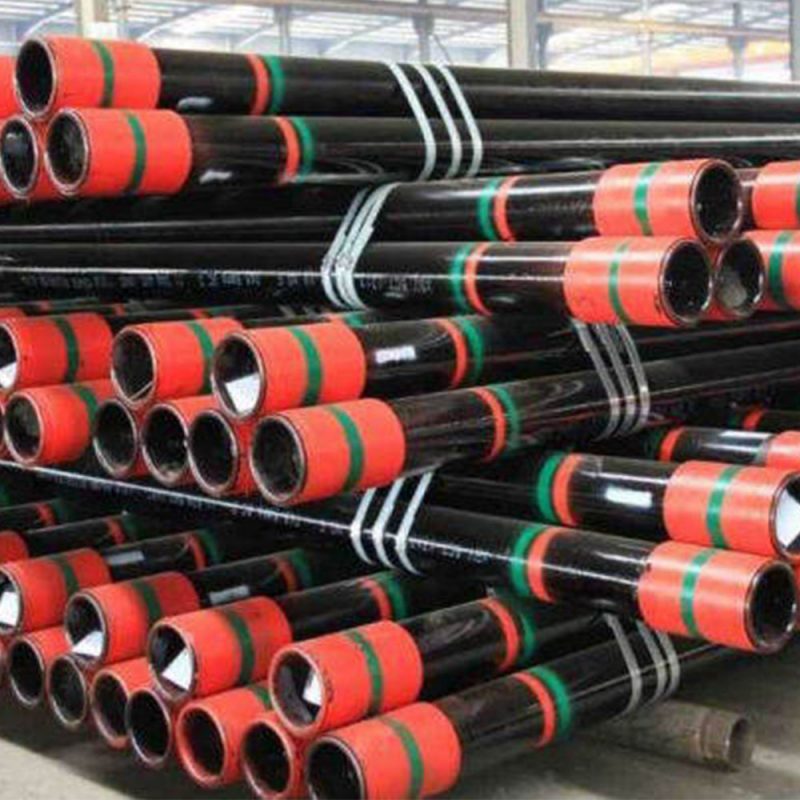
The American Petroleum Institute specification API 5L covers both seamless and welded steel line pipe. This is steel pipe for pipeline transportation systems in the petroleum and natural gas industries. API 5L is suitable for conveying gas, water, and oil. API 5L line pipes are available in multiple carbon steel material grades, designated as Grade B, X42, X46, X52, X56, X60, X70 and X80. The two digit number following the “X” indicates the Minimum Yield Strength (in 000’s psi) of pipe produced to this grade.
What are the different types of pipes?
There are basically 4 types of pipes based on the mode of production.
- Seamless Pipes are made of carbon steel in a process which results in pipes without any welded seams. Seamless pipes are generally used for oil and gas transmissions pipelines and other industrial and structural uses where medium and high pressure service are required.
Commonly available Pipe Diameter from 1/8” to 34”.
Wall thickness is up to 25mm.
Pipe length in 6 or 12 metres. Customized fixed length can be made to order.
- Longitudinal Submerged Arc Welded (LSAW) pipes are manufactured out of flat plates (skelp) that are formed, bent and prepared for welding. LSAW pipes are used in transmission service where high pressure and large diameter and wall thickness are specified.
Commonly available Pipe Diameter from 16” to 64”.
Wall thickness is up to 40mm.
Pipe length in 6, 12 or 18 meters. Customized fixed length can be made to order.
- Electric Resistance Welded (ERW) pipes are produced using resistance heating to make the longitudinal weld but most pipe mills now use high frequency induction heating (HFI) for better control and consistency. ERW pipes are generally used for conveyancing of gas and liquids with low and medium pressure requirements.
Commonly available Pipe Diameter from 4” to 24”.
Wall thickness is up to 20mm.
Pipe length in 6 or 12 meters. Customized fixed length can be made to order.
- Spiral Submerged Arc Welded (SSAW) pipes are produced through spiral weld construction which allows large diameter pipe to be produced from plates. SSAW pipes are used extensively in high pressure gas pipelines.
Commonly available Pipe Diameter from 16” to 120”.
Wall thickness is up to 22mm.
Pipe length in 6, 12 or 18 meters. Customized fixed length can be made to order.
What’s the difference between black pipe and API 5L steel pipe?
Black pipe refers to ordinary steel pipe. It looks black from appearance. The dark colour comes from the iron-oxide formed on its surface during manufacturing. Black pipe is actually made of a “low-grade” mild steel. Most black pipes in the local market conforms to ASTM A53 – “Standard Specification for Pipe, Steel, Black and Hot-Dipped, Zinc-Coated, Welded and Seamless”. Black pipes are generally made for low pressure usage in the transport of natural gas, water, air and steam which usually stay below 100 psi. Black pipes are easy to fabricate, readily available, and cost less than most other steel pipes.
API 5L steel pipes are made according to a more comprehensive specification with a much wider range of strength levels and particular attention is given to toughness and toughness tests for sour services and higher pressure/temperature classes. These pipes are generally made of “higher” grade mild steel than black pipes and its range of strength levels is much wider than black pipes. API 5L steel pipes normally cost more than black pipes.
What does it mean by “mill tolerance” wall thickness and what is its significance when buying pipes?
One of the most important factors in buying steel pipes is understanding mill’s or manufacturer’s tolerance especially when it comes to wall thickness tolerance. It is a major misconception that “mill tolerance is the allowance for variation in the thickness of pipe from nominal pipe thickness which is 12.5% according to API 5L.” Based on the above, some mills / suppliers have a questionable market practice of supplying, for example, 10” Sch. 40 pipe (which has a nominal wall thickness of 9.27mm) with 8.2mm wall thickness while claiming that is within the allowable mill tolerance according to API 5L. A thinner pipe means that it is lighter and as such, uses “less” material therefore allowing these mills / suppliers to “profit” from the mill tolerance.
Firstly, the best way to understand mill tolerance is that it comes about from the manufacturing process of pipes itself. Seamless pipes are made from piercing of a billet and rolling through a series of rollers. There may be some wall thickness differences caused by the manufacturing process leading to possible eccentricity. Welded pipes do not have this issue because it’s easier to get high accuracy when producing steel plates. However, welded pipes need to take into account the weld joint efficiency factor meaning that there may be some differences in wall thickness at the weld joint area. The allowable differences in wall thickness are defined under the tolerance for wall thickness under the various standards and codes.
Mill tolerance for wall thickness under API 5L cannot be read in isolation from other tolerances ie. OD and weight tolerance. It is important to note that API 5L implies that wall thickness tolerance of 12.5% is limited by weight tolerance of 3.5%. For example, 10” Sch. 40 welded pipe should have a constant wall thickness of not less than 8.94mm across the entire pipe body in order to be within tolerances under API 5L.
What is “3LPE” pipe?
3LPE or Three Layer Polyethylene is an anti-corrosion system providing excellent pipeline protection for small and large diameter pipelines with moderately high operating temperatures. 3LPE is a multilayer coating composed of three functional components: a high performance fusion bonded epoxy (FBE), followed by a co-polymer adhesive and an outer layer of polyethylene (PE) which provides tough, durable protection. In addition, 3LPE systems offer an excellent resistance to cathodic disbondment, reducing life-cycle cost of cathodic protection.
The FBE component provides excellent adhesion to steel, providing superior long term corrosion resistance and protection of pipelines operating at moderate temperatures. The tough outer PE layer protects pipelines during transportation and installation thereby reducing costly repairs while also providing added in-ground protection against shear forces, chemicals and abrasive soil conditions.
By increasing the thickness of the PE outer layer, the 3LPE System can provide a high level of mechanical protection across a variety of difficulty environments without requiring the use of costly back-fill.
What does PSL 1 and PSL 2 mean?
API 5L pipe have two distinct product specifications for all their material grades, namely PSL 1 and PSL2. PSL is the short name of product standard level which essentially differentiates the “quality standard” of the pipe. PSL2 is higher than PSL1, not only the inspection standard is different, also the chemical property and mechanical strength standards are different. PSL2 is more strictly than PSL1 on the chemical properties test, tensile strength test, non-destructive test, and impact test. So when placing the order for the API 5L line pipe, it should be stated clearly, apart from the size and grade, the production standard level, PSL1 or PSL2.
Pipe Fittings
Are ASTM234 WPB fittings seamless?
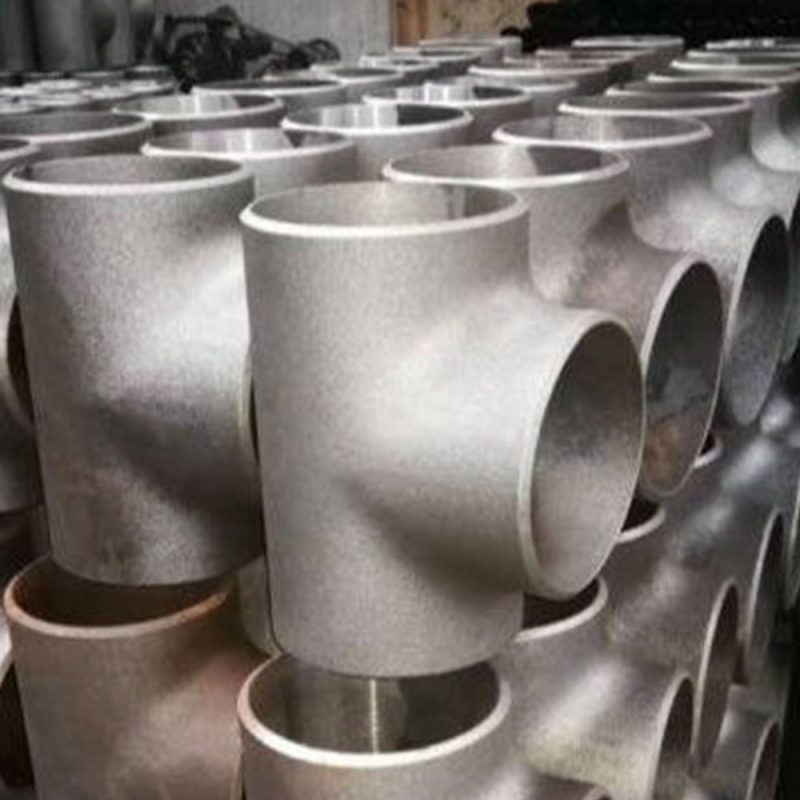
ASTM A234 standards covers wrought carbon steel and alloy steel fittings of both seamless and welded construction. These fittings are for use in pressure piping and in pressure vessel fabrication for service at moderate and elevated temperatures. WPB is one of the steel grade in this standard. W means weldable, P means pressure, and B means Grade B. ASTM A234 WPB-S pipe fittings means the fittings are made from the seamless steel pipes while ASTM A234 WPB-W means the fittings are made from welded steel pipes. The regular products of A234 WPB pipe fittings are elbows, tees, reducers and caps.
What do you mean by short radius elbow and long radius elbow?
Short radius elbow’s radius is equal to the nominal diameter of the elbow (R = D). Short radii are generally used in low pressure fluids or where the elbows are limited during installation.
In a long radius elbow, the radius of the elbow is 1.5 times the nominal diameter of the elbow (R = 1.5D). Long radius elbows give less frictional resistance to the fluid than the short elbows.
What is “schedule” pipe and fittings?
One of the most common ways to describe a pipe or fitting is by its “schedule”. Many buyers tend to ask for “schedule pipe” or “schedule fitting” when sending out RFQs, without specifying pipe sizes.
Pipe schedule is the term used to describe the thickness of a pipe or fitting. For all pipe sizes the outside diameter (O.D.) remains relatively constant. The variations in wall thickness affects only the inside diameter (I.D.).
A schedule number indicates the approximate value of :
Sch. = 1000 (P/S) where, P = service pressure (psi) and S = allowable stress (psi)
The higher the schedule number is, the thicker the pipe is. Since the outside diameter of each pipe size is standardized, a particular nominal pipe size will have different inside pipe diameter depending on the schedule specified.
What is the wall thickness at the extrados (outer curve) of an elbow?
One of the most important factors to consider when purchasing fittings is the wall thickness at the extrados of the elbow i.e. the outer curve. When manufacturing an elbow whether by mandrel, hot induction or cold forming, the extrados will inevitably become thinner as it is “stretched”, “bent” or “formed”.
Some manufacturers will make an elbow from a pipe of the same size and nominal thickness and the same or equivalent material. While, the elbow will have minimal reduction in wall thickness at the ends, the wall thickness at extrados could reduce significantly depending on the radius of bending.
Eg. Elbow 12” (323.9mm) Sch 40 (10.31mm) and radius = 450mm
R/D = 1.5D
RE = 22%
WT (extrados) ≈ 8.04mm (if using same nominal wall thickness for starting material)
As a result, some of these elbows do not meet the tolerance for wall thickness in accordance to ASME B16.9 (i.e. 87.5% of nominal wall thickness). In order for elbows to meet the minimal requirements, a thicker pipe will need to be used as starting material to manufacture the elbows. In general, for an elbow with R = D the minimal wall thickness has to be at least 150% of the nominal wall thickness in order for the wall thickness at the extrados to be at least 90% of the nominal wall thickness.
Flanges
What is the difference between casted flange and forged flanged?
Forging is the application of thermal and mechanical energy to steel billets or ingots to cause the material to change shape while in a solid state. Casting, on the other hand, is the process where metal is heated until molten. While in the molten or liquid state it is poured into a mould or vessel to create a desired shape.
In producing flanges, casting has a much lower production cost as it entails a relatively more simple production and machining process. However, casted flange has some obvious disadvantages including casting defects such as gas porosity, hot cracking (from solidification) and impurity/inclusions, as well as poor seam-line inside.
By contrast, forged flanges have a higher production cost but offers a much higher quality product. Forging offers uniformity of composition and structure resulting in metallurgical re-crystallization and grain refinement from the thermal cycle and deformation process. This strengthens the resulting steel product particularly in terms of impact and shear strength. Forged flange is generally stronger and more reliable than castings and plate steel due to the fact that the grain flows of the steel are altered, conforming to the shape of the part. Caution must be taken when purchasing flanges as some suppliers may offer casted flanges due to cheaper costs but with compromise on quality and performance.
What do you mean by SORF?
Flanges are commonly described by abbreviations or acronyms as follow :
Types of flanges
Welding Neck = WN
Slip-On = SO
Socket Welding = SW
Threaded =TH
Lap Joint = LJ
Blind = BL
Type of Face
Raised Face = RF
Flat Face = FF
Tongue and groove = TG
Ring Joint = RJ
Therefore, SORF = Slip-on flange with raised face.
What is a flange’s PCD and how is it measured?
The PCD or pitch circle diameter of a flange is one of the most critical dimensions. PCD is also known as bolt circle diameter (BCD) in ANSI/ASME.
PCD is the diameter of a circle that goes through each of the bolt holes. PCD is very important in identifying the right size of flanges. Designers and engineers use the PCD of a flange to help determine the size of a particular flange or gasket in a flanged connection, or to find a match for an installed flange that needs replacement.
In order to measure the PCD of a flange installed in pipework, measure two adjacent holes and calculate the PCD using the following formulae :
4 holes: multiply by 1.414
8 holes: multiply by 2.613
12 holes: multiply by 3.864
16 holes: multiply by 5.126
E.g. 150mm flange has 8 holes and measures 90mm. PCD = 90 x 2.613 = 235mm
What does DN mean?
DN stands for “Diameter Nominale” or nominal diameter. Put simply, it is a rough translation of mm from imperial sizes, assuming that an inch is 25mm. We refer to a 12″ flange as DN300, when in fact it is 304.8mm.
½” = DN15
¾” = DN20
1” = DN25
1 ¼” = DN32
1 ½” = DN40
2” = DN50
2 ½” = DN65
3” = DN80
4” = DN100
5” = DN125
6” = DN150
8” = DN200
10” = DN250
12” = DN300
14” = DN350
16” = DN400
18” = DN450
20” = DN500